RWA Tokenization Explained: How It Works, Key Benefits, and Risks
RWA tokenization is growing fast. This guide breaks down how it works, two settlement models, core investor benefits, and key risks like counterparty exposure and liquidity gaps.
Article Citation Summary
RWA tokenization is growing fast. This guide breaks down how it works, two settlement models, core investor benefits, and key risks like counterparty exposure and liquidity gaps.
What Is RWA Tokenization?
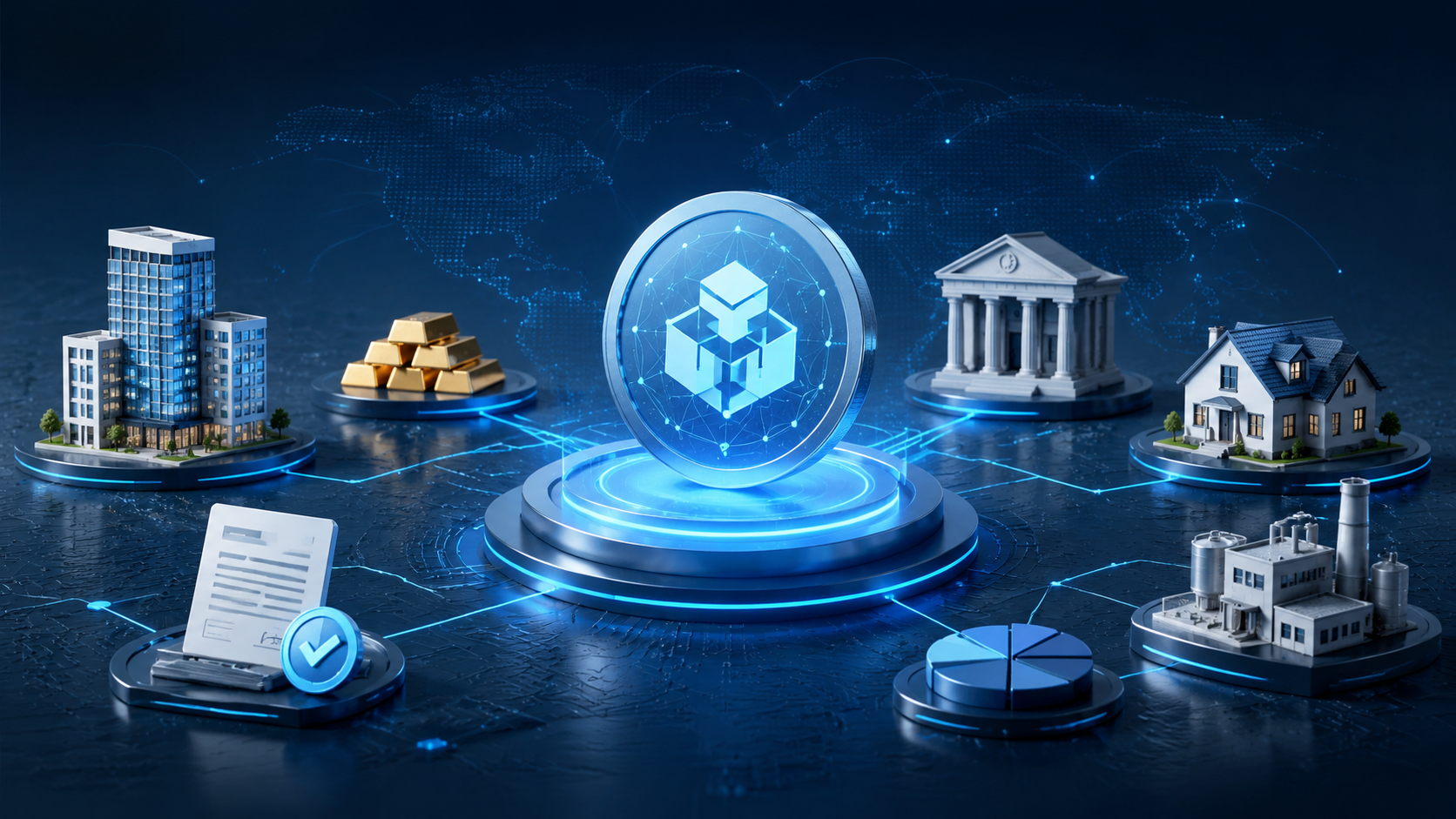
Real World Asset (RWA) tokenization refers to the process of converting physical or financial assets — such as gold, equities, real estate, government bonds, and music royalties — into digital tokens that circulate on a blockchain, with some or all of the asset's rights encoded into a smart contract.
On-chain transaction volume in this space has grown by nearly 400% in recent years. U.S. regulators have identified it as a new priority. BlackRock has tokenized portions of its investment funds, and global exchanges including Nasdaq are exploring blockchain-based settlement. DeFi protocols like Aave have begun accepting RWA tokens as collateral for lending. 2025 marks a clear inflection point for this trend.
What Are You Actually Buying? Two Rights Structures
The fundamental difference between holding a tokenized asset and holding the underlying asset directly is the single most important concept to understand before entering this market.
Many people assume that buying a gold token is equivalent to locking up a corresponding weight of physical gold in a vault somewhere. That is not the case. The two most common rights structures in the market today are:
Structure 1: Economic Rights Model Investors purchase economic rights against a company's asset reserves. The issuing company acts as the counterparty and is responsible for holding and safeguarding the physical asset. Gold tokenization typically uses this model.
Structure 2: Equity Pass-Through Model Investors do not hold the asset itself, but rather a share of equity in the company that holds the asset. For example, if a company owns a building and you buy "1% of the building," you are effectively buying 1% equity in that company — not a direct claim on the building itself. Real estate tokenization commonly uses this structure.
What both models share is this: the value of the token depends entirely on the issuer's credibility and solvency. If the company does not actually hold the reserves it claims, the token rights are worthless. This makes it critical to choose established issuers operating in jurisdictions with strong consumer protection laws and enforceable contract frameworks.
How Do Returns Get Paid? Two Settlement Mechanisms
Using equity tokens as an example, holding the token means holding economic rights tied to that stock — including price appreciation and dividend income. Settlement typically takes one of two forms:
- Direct Distribution Model: When dividends are paid, the issuer transfers the corresponding amount in stablecoins directly to the holder's on-chain wallet.
- Value Accrual Model: Dividends are not distributed separately. Instead, they are reflected as an increase in the token's net asset value. Investors hold shares in a "holding company" that receives dividends, causing its assets — and therefore the token price — to appreciate.
Both models have their use cases. Before investing, always confirm which settlement method a specific product uses.
Programmable Rights: What Can Be Separated
Traditional shareholders typically hold price appreciation rights, dividend rights, and voting rights together. A defining feature of RWA tokens is that they are programmable — issuers can define exactly which rights are attached to a given token.
Common rights-splitting configurations include:
- Price appreciation only, with dividends retained by the issuer
- Price appreciation and dividends, without voting rights
- Any other custom combination defined by the issuer
This flexibility is an advantage for the issuing entity — companies can sell economic rights to raise capital while retaining decision-making control. For investors, it is a potential risk — without carefully reading the contract terms, it is easy to misjudge the actual rights you hold.
Core principle: Before every RWA token purchase, verify exactly which rights the token grants, line by line.
Core Benefits of Tokenization
1. Fractional Ownership Lowers the Entry Barrier
A building worth €100 million can be split into 100 million tokens, each representing €1 of ownership. This allows ordinary investors to participate in asset classes that were previously out of reach with as little as €15 to €100, while simultaneously creating liquidity and enabling an active secondary market.
2. Significantly Faster Transaction Settlement
Traditional asset transfers often involve notarization, title transfers, and multi-party approvals that can take weeks or months. Once tokenized, transfers can be completed on-chain instantly, eliminating the time and cost friction of traditional processes, with 24/7 availability.
3. More Flexible Capital Structures
Through programmable tokens, companies can open economic rights to external investors without giving up voting control, providing much greater flexibility in designing financing structures.
4. Borderless Liquidity (Subject to Compliance Constraints)
At the technical level, anyone connected to the blockchain can trade tokens. In practice, most RWA products have explicit investor eligibility requirements — such as being limited to European investors or meeting specific accredited investor standards — and require KYC verification.
Important: Purchasing tokens through a decentralized exchange to bypass KYC may appear to work, but if the issuer determines you are not a qualified investor when you attempt to redeem, you may be unable to assert your rights and could lose the token's entire value. Always complete verification through compliant channels before purchasing.
5. Collateralized Lending Unlocks Asset Liquidity
Traditional private banking "Lombard loans" — loans secured against held securities — were previously available only to high-net-worth clients. Through RWA tokenization, ordinary users can pledge $1,000–$2,000 worth of tokenized money market funds on protocols like Aave and borrow $500–$700 in stablecoins for other financial operations, significantly democratizing access.
6. On-Chain Transparency
All token holdings and transfer records are traceable on-chain, with position distribution and transaction volume data publicly accessible. Note that on-chain transparency reflects the token's circulation state — it does not verify the issuer's actual underlying reserves. That still requires independent auditing.
Key Risks and Considerations
Risk 1: Counterparty Credit Risk
The foundation of a token's value is whether the issuing company actually holds the assets it claims. Relevant indicators include the company's overall reputation, the existence of independent third-party audit reports, and the legal enforceability of the rights clauses in the token contract.
Generally, tokens issued by reputable institutions under mature legal frameworks carry significantly lower counterparty risk than those from smaller issuers in weakly regulated jurisdictions.
Risk 2: Technology Dependency Risk
The circulation of tokenized assets depends on the stability of the underlying blockchain network. Network congestion — such as Ethereum gas fee spikes during periods of extreme market volatility — can cause transaction costs to surge or transactions to be delayed. It is advisable to hold such assets on blockchain networks with high decentralization and a proven track record of stability.
RWA token pricing also relies on price oracles (such as Chainlink) to sync off-chain asset prices to the blockchain. A temporary oracle malfunction can cause asset price discrepancies, which is particularly dangerous for users who have used tokens as collateral for loans and may trigger forced liquidation.
Risk 3: Misunderstanding Rights and Eligibility
- Rights misunderstanding: Entering a position without carefully verifying the token contract, resulting in holding rights that differ from what was expected.
- Eligibility risk: Purchasing tokens without confirming your investor eligibility status, which may result in losing associated rights upon attempting to sell.
Risk 4: Liquidity Constraints
Some tokenized markets remain limited in scale and market depth. Small transactions are generally fine, but larger positions may face:
- Buying at a price above fair market value (due to scarce sellers)
- Being forced to sell at a discount when offloading a large position, further depressing the asset's valuation
Real estate tokenization markets are particularly prone to this. While liquidity is already better than traditional property transactions, exiting a substantial position in a short timeframe remains a meaningful challenge.
The Current Market: What Assets Are Being Tokenized?
The largest asset categories by on-chain tokenization volume are currently:
- Public Debt: U.S. Treasuries and government bonds from various countries (largest by volume)
- Private Debt: Corporate financing bonds
- Equities: Partial rights tokenization of publicly listed shares, with programmability as a primary driver
- Real Estate: Rental markets and property financing, typically including rental yield distribution (net of operating and management fees)
- Commodities: Gold, silver, and other physical goods
- Intangible Assets: Music royalties, intellectual property, and alternative assets such as fine art and rare wines
Stablecoins are sometimes included in RWA discussions, but strictly speaking they represent the tokenization of fiat currency rather than real world assets. Some stablecoin issuers hold reserves in government bonds and precious metals, creating a degree of definitional overlap with RWA.
Conclusion: A New Distribution Layer, Not a New Asset Class
RWA tokenization does not create entirely new asset classes. It provides a new technological layer for distributing and transferring rights to existing assets — restructuring the settlement mechanism between holders and assets, lowering participation barriers, and giving rights structures greater flexibility through programmable contracts.
The core question in this market is no longer whether it will develop, but how fast. For investors looking to gain exposure, the practical approach is to start with asset classes you already understand, choose reputable issuers operating in jurisdictions with strong legal protections, and read the rights clauses in every token contract carefully before buying.